To select the best robotic cleaner it is essential to understand the particular characteristics of your pool. A robot is an expensive investment, and its performance is entirely dependent on the extent to which it's matched to the specific conditions of your pool. This can lead to inefficient cleaning your pool, possibly causing damage to your machine or pool as well as buyer's remorse. This guide is comprehensive and outlines the 10 essential specifications of your pool that you have to know prior to buying.
1. Primary Surface Materials:
This is the single most important factor. The finish of the pool determines the type of brushing mechanism the robot should use to clean effectively without causing damage.
Concrete/Gunite/Plaster (including Pebble Tec & Quartz): These are rough, durable surfaces that often develop algae films. They require a robotic with bristles stiff and stiff (often vinyl-coated or nylon) that can aggressively scrub and scour the surface to remove biofilm and dirt.
Vinyl Liner Vinyl Liner and pliable material, can be easily punctured. A robot designed for vinyl requires wheels which are non-sharp and smooth, as well as soft nonabrasive brushing (typically rubber or vinyl). A cleaner that has stiff brushes designed for concrete may wear or tear the liner.
Fiberglass: Fiberglass is a plastic shell that has a the smooth exterior of a gel-coated, smooth surface. Vinyl, for instance, is abrasive and, can scratch or scratch surfaces. Robots that are equipped with soft rubber brushes, or brushes that are not rolling, are the best. It is also possible that robots use less power to clean the surface when it's smooth.
2. Complexity and Shape of the Pool:
The required length of cable and navigational intelligence is determined by the geometric shape of your swimming pool.
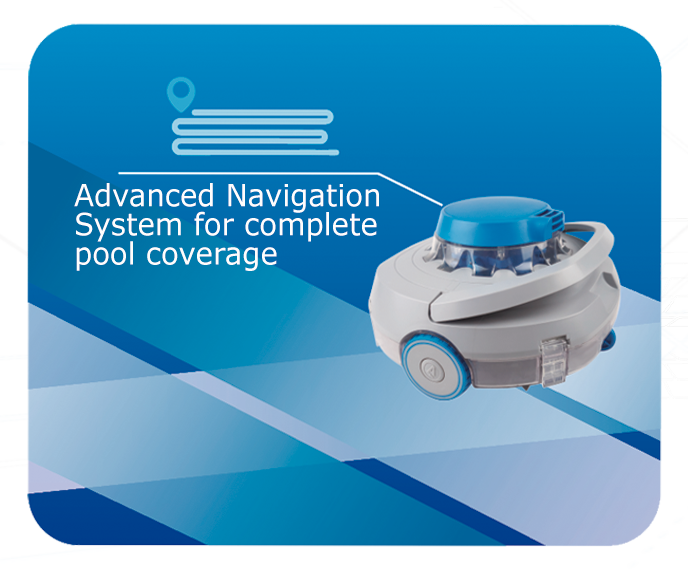
Rectangular Vs. Freeform: A straightforward rectangular pool is the easiest to wash. Robots with random-path paths are able to clean it efficiently. The curves in freeform pools, kidney-shaped pools, and L-shaped pools can cause robots be stuck or not see the curves completely. For these, a robot equipped with advanced algorithmic navigation (gyroscopic or smart-sensing) is strongly advised to guarantee full coverage.
Coves, Ledges and Transitions The transition point between the pool's floor and the wall (the "cove") is an area where debris may accumulate. Make sure the robot is designed to remove this surface. If your pool features large flat ledges or sun shelves (Baja shelf), make sure the robot is able climb over them and keep them clean. Some models were created for walls and floors.
3. Dimensions of the Pool
It is essential to consider choosing a model with an adequate power cable.
Cable Length: The general rule is that the cable of the robot must be at least as long as the largest dimension of your pool (usually its length) and an additional few feet to run around the edges and to ensure that the power source is far enough away from the water. It is not unusual for pools with a large or medium dimensions to have cables that measure 60 feet. Measure your pool's longest side before you purchase.
Depth Capability: The majority of modern robots can clean depths between 8 and 10 feet without difficulty. In the event that you've got a depth of more than 10 feet (e.g. diving pool) It is important to verify what robots can clean. This could cause the motor of the pump to overload and invalidate the warranty.
4. Information on the Water Level and Tile/Copping
Cleaning the water's interface structure and the surface of the pool is vital.
Waterline Tile Cleaning It is a crucial feature of mid-to-high-end robots. If your tile, stone, or glass has persistent waterline scum, then you should consider a robot that is advertised for its excellent waterline cleansing capabilities. It's usually a combination of a modified climbing pattern and a specially designed brushing at the highest point.
Coping Type The material that covers the pool's wall (coping) may be made of concrete, stone, or pavers. If it has a sharp, aggressive overhang, it can possibly snag or damage the robot's cable over time. When you are routing the cable, be conscious of this.
5. In-Pool Features and Obstacles:
A pool that is safe is easier than a pool that is cluttered with debris.
Main Drains/Vents. Check that the main drain covers are securely attached and flush to the pool's floor. Certain older drainage systems that protrude can be a trap for smaller robots. Floor-mounted water return outlets typically do not pose a problem.
These features, such as ladders, steps as well as built-in seating, may interfere with a robot’s cleaning pattern. Ladders that have their legs on the floor can hold robots. Benches and steps require an engine with enough power and traction in order to climb and clean them. Robots that have simple navigation might not be able to effectively clean these areas. Smarter robots should.
Clean these large flat surfaces, similar to steps. Verify that the robot is able to safely traverse horizontal surfaces.
6. Entry and exit points (for robots):
Consider the best method of getting the robot into the water and out.
Physical Access - Do you require to transport the robot across the deck or down a set of steps? The weight of the robot becomes an important aspect. A 25-pounder robot is much more manageable on a week-to-week basis than a 40-pounder. It is crucial to have a cart for storage in this situation.
Robots for Above-Ground Swimming Pools Though less well-known there are robots specially made for above-ground pools. They are usually lighter and do not have the ability to scale walls. Instead, they are designed for the floor or the lower section of the wall.
7. What kind of debris do you have?
What features you require will depend on the main "job" your robot will be required to do.
Filtration system: If fine dust/pollen/sand is the primary issue, it is imperative to have an industrial robot equipped with ultra-fine filter cartridges (pleated paper or very tight mesh) to capture microscopic particles. It is vital that your robot comes with ultra-fine filters (pleated papers or meshes that are extremely fine dimensions) and is able to use these filters effectively to collect microscopic dust particles.
Leaves (including twigs) as well as acorns and acorn twigs: To manage larger amounts of debris, you'll need an automated system that has a large bag or canister for debris as well as a powerful pump to get rid of the debris, and a filter that isn't blocked. Some models feature impellers specifically designed to grind up larger leaves to prevent the clogging.
8. The location of the power source, as well as the type of outlet:
Robotic vacuum cleaners work on low voltage DC energy supplied through a transformer that is plugged into a standard outlet.
GFCI Outlet requirement: The power source MUST be directly connected to an GFCI Outlet for security. It is not a matter of negotiation. Installing one by an electrician is necessary in the event that there isn't one close to your pool.
Distance from Pool The transformer should be placed at least 10 feet away from the pool's edge to ensure it is safe from water splash and weather. Ensure your cable is long enough to reach from this point to the furthest point of the pool.
9. Local Climate and Storage Environment
How you store your robot can impact its life span.
Storage during the off-season. Most manufacturers specifically warn against storing the machine under direct sun or under water for long periods. UV rays degrade materials like plastics, cables and other substances. When not using your robot, it is best to store your robot and cables in a place that is cool, dry and shaded (such as a garage or shed).
Make use of the robot during the Season: If your robotic is used frequently for a long time, you might want to consider purchasing a storage container that allows you keep the robot in a neat location close to the pool. You can avoid having cords get tangled in the deck.
10. Existing Pool Circulation and Filtration:
While a pool robot operates on its own, it is an integral part of the system.
Complementary functions - The robot's primary task is to eliminate settling debris and scrub the surface. It's not a replacement for the pool's main circulation and filter system. These systems are responsible for removing the dissolved particles, distributing chemicals, and preventing algae. This robot is designed to lessen the load on your main pool filter.
Chemical Balance: An algae-prone surface of a pool, even if it's free of algae, is still affected by a chemical imbalance. The robot can help maintain the cleanliness of your pool but it cannot replace the need for proper sanitization and water balance. View the top conseils pour le nettoyage de la piscine for website tips including pool cleaning product, pool cleaner with hose, a swimming pool, pool cleanliness, swimming pool cleaners near me, aiper smart pool cleaner, robotic pool cleaners for above ground pools, the pool cleaner pool sweep, cheap swimming pools, swimming pools stores near me and more.
Top 10 Tips For Pool Cleaning Robots Service, Warranty, Brand Reputation, And Support
If you buy a robot pool cleaner, you're investing a substantial amount of money. These appliances are complex and are electro-mechanically engineered to function in harsh environments. While the functions of a robotic pool cleaner are attractive, their longevity value and comfort will ultimately be affected by other factors, such as the strength and integrity of the manufacturer's warranty and accessibility to support from the customer, and the loyalty of the brand. These elements will shield you against expensive and premature repairs. A solid warranty reflects the trust in a product's quality. Reputations of brands are built on reliability and user experience for many years. The most important thing is to have an experienced and knowledgeable customer service team when there's an issue, which can happen with any device. Neglecting this research can turn the best purchase into a gruelling and expensive paperweight.
1. Understanding Warranty Structures Parts, Seals, and Labor.
A warranty isn't a single entity. You have to dissect it. The standard offering is often a "2-Year Full Warranty," but what does that mean?
The cost of parts including motors, control boards and tracks, are covered.
The cost of labor is vital. Does the warranty cover the work of a skilled technician to identify the problem and fix it? Certain warranties are "parts only" leaving you with the possibility of a high cost for repair.
Seals/Waterproofing. The seals which stop water from entering are crucial. You should ensure that they are covered during the duration of the warranty as the failure of these seals can be catastrophic.
2. Understanding "In-Warranty" Service Logistics.
The procedure for getting a broken robot repaired is an essential factor to consider.
Mail-In Service: Most common. It is your responsibility to ship the device to an authorized service center, usually at your expense. It is essential to take care when you pack the unit to protect it from damage while in transit.
Local Authorized Service Centers - A important benefit Certain brands have a network of local pool service providers that are authorized to repair warranty issues. This is much more convenient than shipping a large and wet product across the country.
Advanced Replacement Programs - A excellent level of service. The company ships you a replacement unit immediately, often before you've even returned the damaged one, minimizing the downtime of your pool.
3. The critical importance of a warranty on the swivel cables
The swivel cable is the mainstay of a robot. They are subject to constant movement as well as UV exposure, and could even be getting caught in a tangle. This is one of the most common points of failure. Examine the warranty to find specific mention of the cable. The cable should be covered for the duration of the warranty. Certain manufacturers may classify it as "wear products" and provide the warranty for a shorter period. This is a significant disadvantage.
4. Researching brand longevity and market presence.
It is vital to know the history. A firm that has been making pool cleaners for a long time has always refined its designs, overcome frequent failure points, and established an established supply chain for parts. Fly-by-night companies that sell cheap robots via Amazon may disappear within an entire year, leaving customers with no working product or warranty service. Make sure you buy from reputable brands.
5. The Value of Longevity in Models and Parts Accessibility.
To determine the brand reputation of a specific model, check how long it's been on the market for. A model in its 5th year of production is likely to have been redesigned and corrected of design flaws in the beginning and carry a substantial inventory of replacements parts (brushes. filters. tracks) available even years after discontinuation. New models are a risky gamble on the reliability front.
6. Patterns can be found through the analysis of user and independent reviews.
Do not just look at the star ratings on the retail websites. To find specific themes, read the reviews in depth.
Positive Patterns: Watch for a consistent remark about reliability throughout the seasons, quiet operation, and the cleaning efficiency.
Negative Signs: Pay close focus on complaints repeated about the same component failing (e.g., "my cable broke after 13 months," "the motor seals leak") Poor navigation or bad customer service. These patterns indicate common failures and flaws in the brands.
7. Examine the Customer Support Accessibility prior to purchasing.
Check out the brand before purchasing.
Telephone Support: Does the phone number show up in public? Make a call. Check how long you're waiting on hold and gauge the knowledge of the person who answers.
Online Resources: Does the business have a comprehensive website that includes user manuals for download, FAQ sections, tutorial videos, and troubleshooting guides? This indicates that the business is committed to customer support.
Email/Contact Forms: Send a pre-sales question. The speed and quality of the response you receive is a good indicator of the type of after-sales assistance you can anticipate.
8. The clarification of the Warranty Registration and Requirements.
How do I activate the warranty.
Do you need to register? Some warranties require registration online.
Keep your original purchase receipt (digital, or a physical duplicate). It is usually required to verify a claim for a guarantee because it establishes the date of purchase and establishes the warranty period.
Authorized Retailers: Purchasing from an authorized dealer is often an essential requirement to validate your warranty. Marketplaces that allow unlicensed third-party sellers to offer products could invalidate your warranty.
9. Common Warranty Violations.
The warranty contract can be breached. you may violate. The following actions could be grounds for invalidating warranties:
Extension Cords: They're nearly always banned because of the risk of drop in voltage, among other security risks.
A Non GFCI Outlet The transformer being plugged into a non GFCI outlet can end the warranty. It's an issue of safety.
Open the Sealed Unit. If you try to repair the motor, electronics or other components yourself then the warranty is voided.
Use of non-OEM parts: If you use filters or brushes that are not manufactured by the manufacturer, your warranty could be cancelled.
10. After Warranty, Planning for long-term use:
Consider the product's entire lifecycle. What happens after the warranty expires?
Ask about the cost of repairs that are not covered under warranty, such as the cost of a replacement motor. This helps you decide whether it is worth the cost of repair as opposed to replacing the motor.
Parts are readily available: A reputable manufacturer is likely to stock spare parts for a number of years following the time that a model has been taken off the market. An unrecognized brand might not have parts available for many years after a model is discontinued, making any failures that occur post warranty an absolute waste.
Some models include parts like tracks or brushes that can be replaced. This extends the useful life of the item well beyond the warranty period. This also lowers the cost of maintenance over time. Take a look at the top rated robot piscines pas cher for blog recommendations including best way to clean swimming pool, pool store, robotic pool cleaners for above ground pools, cleaning robot for pool, pool cleaning how to, robotic pool cleaners for above ground pools, pools pro, swimming pool sweeper, swimming pool cleaning services near me, swimming pool in and more.
